






•₹3,200/acre push for demo plots in 12 districts to showcase scientific cultivation techniques: Khudian
•Mann Govt offers 40% subsidy on harvesters, small tractors, planters to cut labour costs, boost mechanisation: Agriculture Minister
•Agri Dept, PAU hold camps, webinars to train growers on Chova planting, certified seeds, fertiliser use & pest management: Gurmeet Khudian
CHANDIGARH, SEPTEMBER 13:
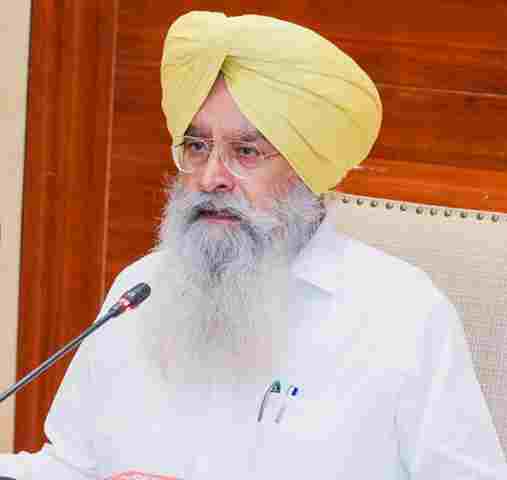
With sugarcane acreage rising to 1.16 lakh hectares and production target set at 700 lakh quintals this season, Punjab Agriculture and Farmers Welfare Minister S. Gurmeet Singh Khudian on Sunday announced a multi-pronged strategy to make sugarcane Punjab’s most remunerative crop through aggressive mechanisation, grassroots tech outreach and direct financial incentives for growers.
Describing sugarcane as Punjab’s third-most critical crop after wheat and paddy, S. Gurmeet Singh Khudian said that Chief Minister Bhagwant Mann-led Punjab government is leaving no stone unturned to boost productivity, improve sugar recovery and cut cultivation costs by promoting large-scale adoption of advanced farming techniques.
Citing official data, the Agriculture Minister said that area under sugarcane in Punjab has increased from 1,11,818 hectares in 2025-26 to 1,16,131 hectares in the current 2026-27 season, which is expected to yield nearly 700 lakh quintals of cane if weather remains favourable. Of the total acreage, 47,295 hectares is under ratoon crop, 51,174 hectares under spring crop and 17662 hectares under autumn crop, he added.
“However, with the proactive interventions in place and a favourable weather outlook, we expect marked improvement in both yield and sugar recovery in the upcoming season,” said S. Gurmeet Singh Khudian.
For the 2026-27 season, the government has rolled out an incentive of Rs 3,200 per acre for farmers setting up demonstration plots showcasing recommended cultivation techniques. The scheme will be implemented in 12 districts — Amritsar, Gurdaspur, Hoshiarpur, Jalandhar, Shaheed Bhagat Singh Nagar, Fatehgarh Sahib, Rupnagar, SAS Nagar, Patiala, Fazilka, Faridkot and Kapurthala.
These demo plots will promote advanced practices such as wide-row spacing, trench planting, intercropping, mulching and scientific ratoon management to boost yields while cutting input costs.
To address shortage of farm labour during sowing and harvesting, the state government is promoting mechanisation by offering 40% subsidy on key equipment including sugarcane harvesters, small tractors, cane planters and ratoon managers. “Mechanisation is no longer an option but a necessity. Our aim is to make these machines easily accessible and affordable for every farmer,” Khudian said.
The Agriculture Minister informed that joint teams of Punjab Agricultural University (PAU), the agriculture department and sugar mills are holding extensive awareness camps across the state, focusing on wide spacing trench planting method, primary seed nurseries, disease-free certified seed varieties, balanced fertiliser use, integrated pest management and ratoon management. So far, 14 webinars have trained around 1,100 farmers, while 320 training camps have directly reached over 15,000 farmers. Real-time technical guidance is also being provided through Facebook, YouTube and field staff interactions.
“Sugarcane sustains a vast network of farming families and farm labourers across Punjab and their economic well-being is directly tied to this crop. It is our duty to make its cultivation more profitable and future-ready,” said S. Khudian.
Reiterating CM Mann-led Punjab government’s commitment to welfare of agrarian community, S. Khudian said the multi-pronged strategy combining financial incentives, technological upgradation, capacity building and farm mechanisation is aimed at making sugarcane cultivation a highly remunerative enterprise.
“Our comprehensive approach will bring down cultivation expenses, enhance productivity and improve sugar recovery. We are fully committed to ensuring that Punjab’s sugarcane farmers reap the rewards of their hard work and contribute meaningfully to the state’s agrarian prosperity,” he affirmed.

