

More than 45 lakh Punjabis enrolled under Mukh Mantri Sehat Yojana; orthopaedic treatments emerge among top healthcare services: Dr Balbir Singh
CHANDIGARH, May 30:
Punjab is witnessing a steady rise in bone, joint and trauma-related health conditions, with orthopaedic treatments emerging as one of the most significant components of the state’s public healthcare delivery, according to data from the Mukh Mantri Sehat Yojana.
Highlighting the trend, the State Health Agency (SHA) data revealed that more than ₹84 crore has been spent so far on bone, joint and trauma-related treatments so far, under the scheme, reflecting both increasing demand for surgical care and expanded access to specialised orthopaedic services across government hospitals.
The data shows that knee replacements account for the highest share of procedures under the scheme, followed by hip surgeries and a large number of fracture fixation cases involving plates, nails and other implants. These interventions are increasingly being performed in district and tertiary care hospitals under cashless treatment coverage.
Punjab has now recorded over 45 lakh registrations under the Mukh Mantri Sehat Yojana, indicating widespread utilisation of cashless healthcare services. Ludhiana district has reported over 4.8 lakh beneficiaries, while Patiala has recorded around 4.1 lakh beneficiaries under the scheme.
The increasing caseload of orthopaedic conditions reflects a broader public health shift, with degenerative joint diseases and mobility-related disorders becoming more common, particularly among the ageing population. Patients presenting with knee and hip deterioration, chronic joint pain and restricted mobility are being increasingly seen in government hospitals.
The orthopaedic care, which often involves surgical implants, prolonged treatment and rehabilitation, traditionally places a significant financial burden on households.
For a beneficiary under the scheme, 43-year-old Gulshan Taneja from Khera Gajju near Rajpura, these broader trends became personal in a gradual, unrelenting way.
Taneja had met with an accident while working at a factory. Walking began to take effort. A sudden pain would stop him mid-step, forcing him to steady himself against a wall. The swelling around his knee persisted, and stiffness made even simple movements feel unfamiliar. Sometime, he would pause before standing, unsure whether his leg would hold his weight.
He was admitted to Rajindra Hospital, Patiala on May 6 and underwent treatment for ligament tear the following day. Doctors recorded symptoms including severe joint pain, swelling, instability and difficulty bearing weight.
Under the Mukh Mantri Sehat Yojana, treatment worth ₹86,750 was provided cashlessly. He was discharged on May 12, returning home without the immediate fear of a medical bill that could have weighed as heavily as the illness itself.
Taneja said, “I am recovering now and it’s thanks to the Sehat card that I did not have to pay any money for my treatment. The Mukh Mantri Sehat Yojana is helping us reduce out-of-pocket expenditure by making such treatments accessible.”
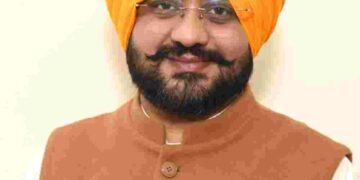
Punjab Health Minister Balbir Singh said, “The burden of orthopaedic disorders has been on an exponential rise, and thus, has brought to light the indispensable need to buttress accessible and affordable operative care across the state of Punjab.” He added that, under the Mukh Mantri Sehat Yojana, the government is working to provide cashless knee, hip, and trauma treatments to thousands of patients, reducing financial hardship while enhancing mobility and recovery, along with overall quality of life.
The expenditure of over ₹84 crore in around 4 months under the scheme represents not only increased healthcare utilisation but also a broader shift towards restoring mobility, reducing disability and improving quality of life for patients across Punjab.

